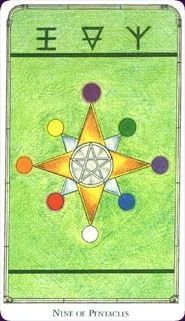
tarot
Pythagorean
Ancient Greek mathematical and magical philosophy applied to tarot symbolism.
by John Opsopaus · 2001
pythagoreanmathematicsmagicoccult-philosophy
Find a copy →We link out and never sell decks. Buying through links may earn us a small commission.
From the archive
An excerpt from a review at the Aeclectic Tarot archive, in the original reviewer's voice.
Pythagorus was an ancient Greek mathematician, famous to most high school students for creating the theorem for right angle triangles. What is lesser known is that he was also a magician and philosopher and his ideas are part of the...
If you like Pythagorean

Stay in the loop
From the Canon
Updates from Tarot Canon, when there is something worth sharing.