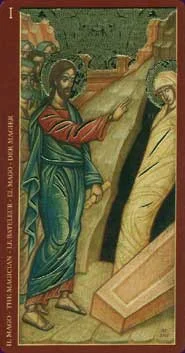
tarot
Golden Tarot of the Tsar
Russian Orthodox iconography and Byzantine tradition as tarot framework.
by A. Atanassov · Lo Scarabeo · 2002
Find a copy →We link out and never sell decks. Buying through links may earn us a small commission.
The Canon's read
Tarot Canon's own assessment, written for this catalog.
The title misleads and the review corrects it: not a deck of Tsars but of icons, Russian Orthodox Christianity's veneration images carried into tarot form by Atanas Atanassov, the Bulgarian master painter whose Da Vinci deck this catalog also holds, through Lo Scarabeo in 2002. The gold is iconography's actual gold, the divine light convention of the Byzantine tradition, and the deck's gravity comes from using a living faith's visual language with evident respect rather than exotic borrowing.
An icon-based tarot is a genuine theological curiosity, Orthodoxy has no divination tradition to bless it, and the deck resolves the tension by reading as sacred art appreciation more than fortune-telling: draws land like standing before an iconostasis, met by a gaze older than the question. It suits admirers of Byzantine and Russian sacred art, Atanassov's collectors, and readers whose practice runs contemplative and reverent. Those uneasy mixing living liturgy with cards are honoring the same instinct the deck walks carefully around.
From the archive
An excerpt from a review at the Aeclectic Tarot archive, in the original reviewer's voice.
Despite the aristocratic title, this is not a deck devoted to the Russian Tsars, but a deck with its basis in the images of the faith of Russian Orthodox Christianity. The veneration of religious images - icons - is a...
If you like Golden Tarot of the Tsar
Stay in the loop
From the Canon
Updates from Tarot Canon, when there is something worth sharing.