tarot
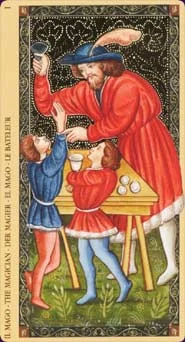
Golden Tarot of the Renaissance
Ferrarese courtly tarot inspired by Renaissance poetry and art traditions.
by Giordano Berti, Jo Dworkin · 1994
Find a copy →We link out and never sell decks. Buying through links may earn us a small commission.
The Canon's read
Tarot Canon's own assessment, written for this catalog.
The archive review opens with Boiardo, Love conquers all, circa 1494, and that is the deck's home ground: the Golden Tarot of the Renaissance draws on the Ferrarese courtly world, the Este court whose poets and painters made Ferrara a Renaissance jewel, Giordano Berti's historical curation with Jo Dworkin's execution in the gilded style. This is the catalog's second Renaissance-gold deck, and where the Botticelli samples a single master, the Estensi evokes a court's whole culture, tournament, sonnet and dynasty.
Berti is a serious historian of tarot's Italian origins, and the deck reflects that scholarship: northern Italian courts are where tarot actually began, so a Ferrarese deck is not themed history but returned mail. Gold grounds give it the luxury register the era itself favored. It suits Renaissance-court romantics, students of tarot's true birthplace, collectors of the golden decks, and readers who like their arcana with Boiardo's blessing. The Visconti lineage's admirers will recognize the family resemblance; it is genealogy, not imitation.
From the archive
An excerpt from a review at the Aeclectic Tarot archive, in the original reviewer's voice.
It is always the proudest man whom Love defeats and subjugates No strong arm, no audacity, no blade well-honed, no shield or mail, no other poet can avail for in the end, Love conquers all. Matteo Maria Boiardo circa 1494...
If you like Golden Tarot of the Renaissance



Stay in the loop
From the Canon
Updates from Tarot Canon, when there is something worth sharing.